THE STATUS OF
WOMEN AND YOUTH MENTAL HEALTH IN METRO ATLANTA
Mental health challenges among women and youth in Metro Atlanta are widespread, urgent, and deeply connected to the realities of daily life.
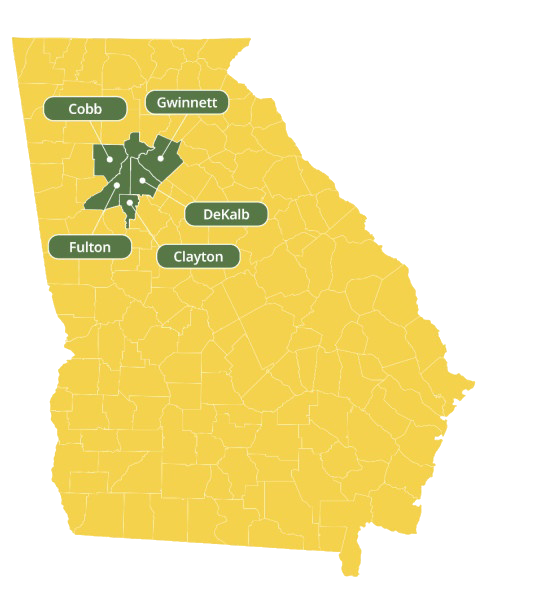
Atlanta Women’s Foundation commissioned a comprehensive assessment to better understand how women, girls, caregivers, and nonprofit staff across Clayton, Cobb, DeKalb, Fulton, and Gwinnett Counties are experiencing mental health today and what kinds of support are most needed.
The findings make one thing clear: mental health is not merely a healthcare issue. It is also shaped by housing costs, caregiving burdens, low wages, childcare access, cultural barriers, and the difficulty of navigating fragmented systems of support. Across the region, women and girls are carrying too much with too little help.

Why This Research Matters
When women and girls thrive, families and communities thrive too. But our report shows that too many women and youth in Metro Atlanta are facing persistent anxiety, depression, trauma, chronic stress, and barriers to care. AWF commissioned this research to help illuminate those challenges, elevate lived experience, and identify opportunities for more equitable, community-informed solutions.
This page shares key findings from The Status of Women and Youth Mental Health in Metro Atlanta: A Comprehensive Assessment, prepared for Atlanta Women’s Foundation in December 2025. The full report covers the five-county region of Clayton, Cobb, DeKalb, Fulton, and Gwinnett.
At a Glance
reported observing anxiety
among clients
depression
or PTSD
or cancellations when trying to
access mental health care
integrated or co-located
services
burdened in Metro Atlanta
burdened in Clayton and
Gwinnett Counties
organizationally supported,
while the report also
highlights high burnout and
compassion fatigue across the
nonprofit workforce


Key Findings
MENTAL HEALTH needs are widespread and intensifying
Across our data sources, anxiety, depression, trauma, and chronic stress surface again and again. Grantee staff describe a climate of “desperation,” “uncertainty,” and emotional overload. Young people, especially girls, describe persistent sadness, social isolation, and pressure not to burden already-stressed caregivers.
Women across the region are not dealing with isolated mental health concerns. They are often navigating overlapping challenges at once: poverty-related stress, housing instability, caregiving demands, relationship violence, and limited access to consistent support.

HOUSING INSTABILITY is both a cause and a consequence of mental health challenges
Our research makes clear that housing insecurity actively shapes mental health. Providers report increased anxiety, depression, family conflict, and interrupted care tied to housing instability. Women describe fear, shame, self-blame, and the emotional exhaustion that comes from worrying about rent, food, and safety.
More than half of all renters in Metro Atlanta are housing cost-burdened, with the highest rates in Clayton County (62.1%) and Gwinnett County (61.3%). The Point-in-Time count also shows rising family homelessness, with women and girls making up 62% of families experiencing homelessness.
WOMEN OF COLOR AND IMMIGRANT COMMUNITIES face additional barriers
Our report highlights how stigma, language access, implicit bias, and lack of culturally concordant care continue to limit access for many women. Some organizations rely on a single bilingual provider for an entire community. Women describe being treated differently because of their accent, and Black women describe being dismissed when their distress did not match providers’ assumptions.
These are not minor barriers. They affect whether women and girls seek care, whether they feel safe enough to return, and whether support actually feels relevant to their lives. Our research repeatedly underscores the need for culturally responsive, community-rooted models of care.

WORKPLACE WELLBEING in the nonprofit sector is part of the story
This assessment does not stop with clients. It also examines the women-dominated nonprofit workforce that holds much of this support system together. Our findings reveal high levels of burnout and compassion fatigue, yet only 36% of staff reported feeling supported, and 67% said they lack access to wellness stipends. Our report cites a work burnout score of 61.8, underscoring just how strained the workforce has become.
That makes workplace wellbeing a women’s mental health issue too. If frontline staff are overwhelmed and under-supported, the systems women and girls rely on become harder to sustain.
ECONOMIC STRESS is one of the strongest drivers of poor mental health
Our research found remarkable consistency here: providers overwhelmingly linked poor mental health to housing costs, food insecurity, unemployment or underemployment, low wages, childcare costs, transportation barriers, and rising living expenses. Women describe the constant mental load of trying to survive, budget, care for children, and stay afloat.
This is especially significant for female-headed households. In Clayton County, 34% of households with children are headed by single mothers, and 30% of single mothers in some counties live below the poverty line. Across the five-county region, the childcare cost burden ranges from 21% to 36% of household income for two children.
ACCESS TO CARE remains fragmented, delayed, and inequitable
Even when women and youth know they need help, getting care is often slow, confusing, expensive, or simply out of reach. More than half of grantee staff said clients face delays or cancellations when seeking mental health services. We also found that only 23% of providers offer integrated or co-located care despite repeated calls from participants for “one-stop” support that combines mental health, housing, jobs, and family services.
Geographic inequities make the problem worse. Clayton County has the region’s most severe provider shortages, including a mental health provider ratio of 1,150:1 compared with 260:1 in Fulton and a national benchmark of 290:1. Uninsured rates across the region range from 11% to 15%, also above the national average.

MATERNAL MENTAL HEALTH needs are urgent and under-resourced
Maternal mental health is one of the clearest gaps identified in our assessment. Support for postpartum depression and anxiety was selected by 69% of survey respondents as a top need for women. Our report also emphasizes the promise of two-generation and three-generation approaches that support mothers, children, and often grandparents together.
This matters because untreated maternal mental health challenges affect not only women, but also children’s emotional regulation, school readiness, family stability, and long-term wellbeing. In many households, especially multigenerational and immigrant households, grandmothers and other caregivers are carrying significant responsibilities with little support of their own.
YOUTH MENTAL HEALTH, especially for girls, demands focused attention
Our report shows a troubling picture for youth mental health across Metro Atlanta. Survey respondents identified a lack of accessible, affordable youth counseling as a major unmet need, alongside trauma, school stress, social isolation, and limited safe spaces.
Girls describe hiding their struggles to protect overwhelmed parents. Our report also points to broader risks: adolescent girls report especially high levels of sadness and hopelessness, and youth of color face steep increases in suicide risk. In Clayton County, youth disconnection is especially high, with 11% of youth ages 16-19 neither in school nor working.
MENTAL HEALTH needs are widespread and intensifying
Across our data sources, anxiety, depression, trauma, and chronic stress surface again and again. Grantee staff describe a climate of “desperation,” “uncertainty,” and emotional overload. Young people, especially girls, describe persistent sadness, social isolation, and pressure not to burden already-stressed caregivers.
Women across the region are not dealing with isolated mental health concerns. They are often navigating overlapping challenges at once: poverty-related stress, housing instability, caregiving demands, relationship violence, and limited access to consistent support.
ECONOMIC STRESS is one of the strongest drivers of poor mental health
Our research found remarkable consistency here: providers overwhelmingly linked poor mental health to housing costs, food insecurity, unemployment or underemployment, low wages, childcare costs, transportation barriers, and rising living expenses. Women describe the constant mental load of trying to survive, budget, care for children, and stay afloat.
This is especially significant for female-headed households. In Clayton County, 34% of households with children are headed by single mothers, and 30% of single mothers in some counties live below the poverty line. Across the five-county region, the childcare cost burden ranges from 21% to 36% of household income for two children.
HOUSING INSTABILITY is both a cause and a consequence of mental health challenges
Our research makes clear that housing insecurity actively shapes mental health. Providers report increased anxiety, depression, family conflict, and interrupted care tied to housing instability. Women describe fear, shame, self-blame, and the emotional exhaustion that comes from worrying about rent, food, and safety.
More than half of all renters in Metro Atlanta are housing cost-burdened, with the highest rates in Clayton County (62.1%) and Gwinnett County (61.3%). The Point-in-Time count also shows rising family homelessness, with women and girls making up 62% of families experiencing homelessness.
ACCESS TO CARE remains fragmented, delayed, and inequitable
Even when women and youth know they need help, getting care is often slow, confusing, expensive, or simply out of reach. More than half of grantee staff said clients face delays or cancellations when seeking mental health services. We also found that only 23% of providers offer integrated or co-located care despite repeated calls from participants for “one-stop” support that combines mental health, housing, jobs, and family services.
Geographic inequities make the problem worse. Clayton County has the region’s most severe provider shortages, including a mental health provider ratio of 1,150:1 compared with 260:1 in Fulton and a national benchmark of 290:1. Uninsured rates across the region range from 11% to 15%, also above the national average.
WOMEN OF COLOR AND IMMIGRANT COMMUNITIES face additional barriers
Our report highlights how stigma, language access, implicit bias, and lack of culturally concordant care continue to limit access for many women. Some organizations rely on a single bilingual provider for an entire community. Women describe being treated differently because of their accent, and Black women describe being dismissed when their distress did not match providers’ assumptions.
These are not minor barriers. They affect whether women and girls seek care, whether they feel safe enough to return, and whether support actually feels relevant to their lives. Our research repeatedly underscores the need for culturally responsive, community-rooted models of care.
MATERNAL MENTAL HEALTH needs are urgent and under-resourced
Maternal mental health is one of the clearest gaps identified in our assessment. Support for postpartum depression and anxiety was selected by 69% of survey respondents as a top need for women. Our report also emphasizes the promise of two-generation and three-generation approaches that support mothers, children, and often grandparents together.
This matters because untreated maternal mental health challenges affect not only women, but also children’s emotional regulation, school readiness, family stability, and long-term wellbeing. In many households, especially multigenerational and immigrant households, grandmothers and other caregivers are carrying significant responsibilities with little support of their own.
WORKPLACE WELLBEING in the nonprofit sector is part of the story
This assessment does not stop with clients. It also examines the women-dominated nonprofit workforce that holds much of this support system together. Our findings reveal high levels of burnout and compassion fatigue, yet only 36% of staff reported feeling supported, and 67% said they lack access to wellness stipends. Our report cites a work burnout score of 61.8, underscoring just how strained the workforce has become.
That makes workplace wellbeing a women’s mental health issue too. If frontline staff are overwhelmed and under-supported, the systems women and girls rely on become harder to sustain.
YOUTH MENTAL HEALTH, especially for girls, demands focused attention
Our report shows a troubling picture for youth mental health across Metro Atlanta. Survey respondents identified a lack of accessible, affordable youth counseling as a major unmet need, alongside trauma, school stress, social isolation, and limited safe spaces.
Girls describe hiding their struggles to protect overwhelmed parents. Our report also points to broader risks: adolescent girls report especially high levels of sadness and hopelessness, and youth of color face steep increases in suicide risk. In Clayton County, youth disconnection is especially high, with 11% of youth ages 16-19 neither in school nor working.
What the Research Tells Us
This study points to a larger truth: mental health outcomes for women and youth are shaped by systems more than symptoms. Economic hardship, caregiving strain, lack of affordable housing, provider shortages, and fragmented services all make it harder to access care and harder to heal.
The strongest solutions will not come from treating mental health in isolation. They will come from investing in integrated care, culturally responsive services, maternal and youth-specific supports, and healthier conditions for the nonprofit workforce itself.

About the Research
Atlanta Women’s Foundation engaged Advantage Consulting, LLC to conduct this mixed-methods, equity-centered assessment focused on women and youth in Clayton, Cobb, DeKalb, Fulton, and Gwinnett Counties. The research combined a literature review with interviews, focus groups, and surveys to capture both population-level trends and lived experience.
Methodology highlights
The assessment included:
RESEARCH
11 subject matter expert interviews conducted between August and October 2025
RESEARCH
6 focus groups
RESEARCH
46 adult women and caregivers, including 10 young women
RESEARCH
14 grantee staff participants in focus groups
RESEARCH
A grantee staff survey reaching staff across 17 nonprofits
RESEARCH
A behavioral health provider survey
RESEARCH
A mixed-methods approach using both quantitative and qualitative analysis, including triangulation across data sources
Why this methodology matters
The research was designed to center the voices of those closest to the work: women, girls, caregivers, youth, nonprofit staff, and frontline providers. That makes this report a picture of how mental health is being lived, felt, and navigated across metro Atlanta.
Read the Full Report
For a deeper look at the data, themes, and recommendations, explore the full report.
Frequently Asked Questions
Take Action
Mental health challenges for women and youth in Metro Atlanta are urgent, but they are not inevitable. With coordinated investment, community-informed solutions, and a stronger support system around women and girls, change is possible.