LIFE SKILLS
FOR WOMEN AND GIRLS
IN ATLANTA
Life skills are the practical capabilities women and girls use every day to achieve stability and independence: financial literacy, workforce readiness, decision-making under pressure, time management, communication, and the ability to navigate complex public and private systems.


Education opens the door. Life skills determine whether a woman can walk through it and stay on the other side.
The Atlanta Women’s Foundation (AWF) advances research-driven, evidence-based investments in life skills development as a foundation for long-term mobility for women and girls across metro Atlanta. Our role is to serve as an educator, funder, and connector. As Atlanta’s only public foundation dedicated exclusively to women and girls, AWF plays a catalytic role: translating local research into strategic investment and mobilizing resources to drive measurable, systems-level change.
Atlanta Women’s Foundation recently commissioned an independent research firm to assess the conditions shaping the well-being of women and youth in Clayton, Cobb, DeKalb, Fulton, and Gwinnett counties. Across hundreds of provider surveys, expert interviews, and community focus groups, one finding emerged with unusual consistency.
Life skills are not optional enrichment. They are the connective tissue between education, employment, and stability, and the absence of them is one of the strongest predictors of crisis.

Financial Stability Is a Life Skills Issue
Financial capability — the ability to budget, save, build credit, plan, and protect against shocks — is the single most-requested life skill among women in AWF’s service area. As one funder interviewed for the 2025 assessment put it: “Financial instability is the biggest unspoken driver of poor mental health.”
Across the five-county region:
The average hourly wage in metro Atlanta is $33.73, yet women are concentrated in essential but low-wage sectors earning $15.38 per hour in food preparation and $16.88 per hour in personal care and service occupations.
Median household income varies significantly across the region, ranging from approximately $60,000 to over $100,000 depending on county, a gap that shapes the financial starting point for women and girls across metro Atlanta.
Poverty rates for female-headed households without a spouse range from 12.9% to 23.6%, climbing above 30% in some counties when children under age five are present.
Families spend between 21% and 36% of their income on childcare for two children, with the highest burden concentrated in communities where wages are already lowest.


An additional barrier is the federal benefit cliff. Women must remain below specific income thresholds to retain childcare assistance, housing vouchers, and food assistance. Accepting a raise, additional hours, or a new role can result in loss of benefits that exceeds the income gain. Subject matter experts describe this as a “hidden tax on ambition” that penalizes the exact behaviors financial literacy programs encourage.
Financial life skills cannot be taught in a vacuum. AWF supports programs that pair financial coaching with emergency cash assistance, asset-building tools, and policy advocacy that aligns benefit structures with women’s real upward mobility.
Workforce Readiness Determines Long-Term Mobility
Employment alone does not produce stability. Across metro Atlanta, employment rates exceed state and national averages, yet a job is not the same as a livable wage, a predictable schedule, or a pathway to advancement.
The 2025 assessment surfaced three structural barriers to women’s workforce readiness:
Women remain disproportionately employed in low-wage sectors with limited benefits, no paid time off, and irregular schedules that make consistent skill-building, training, and care-seeking nearly impossible.

Frontline and shift-based roles often determine schedules week-to-week, making it difficult for women to enroll in evening training programs or commit to ongoing credentialing.

Without reliable, affordable childcare, training and credentialing programs become inaccessible to the women who would benefit most.

Workforce readiness is not a single skill. It is a stack: technical credentials, professional communication, decision-making under uncertainty, financial planning, self-advocacy, and the ability to assemble a stable infrastructure of childcare, transportation, and housing around a new role.
From frontline job training and credentialing to the wraparound supports, AWF invests in organizations that build that full stack that allow women to complete programs and stay in higher-wage roles long enough to advance.
Caregiving Demands Compress the Time Available for Skill-Building
Time management is taught as a personal skill. For women in metro Atlanta, it is more often a structural constraint.
Across the five-county region:
grandparents live with grandchildren; 30 to 40 percent serve as primary caregivers, and 66 to 74 percent of those caregivers are women.
Nationally, 29 percent of caregivers belong to the “sandwich generation,” caring for both children under 18 and older adults; 60 percent of those caregivers are women.
Among Hispanic and Latino caregivers, 43 percent are in sandwich-generation roles, compounding stress for immigrant families already navigating language and economic barriers.
of AWF grantees report that mothers need childcare or time to rest as a top unmet need.
Women describe carrying a constant “mental load” of survival decision-making — rent, food, transportation, childcare, school logistics, eldercare — that leaves no margin for the longer-horizon skill-building required to change a financial trajectory.
AWF advocates for childcare infrastructure, paid time off, and respite supports as life-skills infrastructure. Without time, no skills program will be impactful.
“It’s hard to heal when you’re
worried about rent and food.”
— Focus group participant
Navigating Systems Is a Hidden Life Skill

The single most demanding life skill in the AWF service area is one that is rarely named: navigating fragmented public and private systems while in crisis. The 2025 assessment makes the scale of this burden visible:
- Only 23% of providers offer integrated or co-located services, despite widespread demand for “one-stop” models that combine mental health, housing, employment, and family supports.
- 85% of providers rely on case management to bridge disconnected systems on behalf of clients.
- Women and caregivers must navigate separate eligibility requirements, application processes, and locations for housing, mental health, employment, childcare, and food assistance.
- In immigrant and refugee households, children frequently take on adult responsibilities: translating, managing finances, and interpreting public systems for parents with limited English proficiency.
This fragmentation is not accidental. As our 2025 report notes, it reflects “funding silos, bureaucratic territorialism, and policy designs that prioritize administrative efficiency over client experience.” Women in crisis pay the cost in time, dignity, and missed opportunities for stability.
AWF prioritizes investments in integrated, one-stop service models that reduce the navigation burden and treat system fluency as a learnable, supportable skill rather than a hidden expectation.
Peer Models Translate Lived Experience Into Capability
Some of the most effective life-skills development happens through structured peer relationships with women who have already navigated the systems, decisions, and trade-offs the next woman is facing. Our 2025 assessment found that peer-led approaches are widely valued and underfunded:

- Roughly one in four grantee organizations use peer support or ambassadors with lived experience as part of their core model.
- Subject matter experts repeatedly cited 24/7 peer support phone lines, peer-led financial coaching, and lived-experience mentorship as among the most cost-effective interventions available.
- For Black women in particular, our assessment surfaced a “visibility paradox” in which formal systems require women to outwardly perform distress to be taken seriously, a barrier that peer relationships, rooted in shared context, can directly address.
As one mother shared, “I wish they had someone on call 24 hours… someone to calm me down before I say something.”
Her words illustrate why peer relationships matter: women often need trusted guidance from someone who understands their lived experience, not just another referral. ..
AWF supports peer-led models, lived-experience hiring, and the infrastructure required to sustain them: training, supervision, fair compensation, and clear pathways from peer support into formal credentialed roles.
Two-Generation Approaches Build Capability That Compounds
Life skills don’t develop in isolation. A mother’s financial capability, system fluency, and workforce readiness shape her children’s sense of what is possible. Meanwhile, a girl’s early exposure to financial literacy, communication, and decision-making shapes the trajectory she carries into adulthood.

Two-generation (2Gen) and three-generation (3Gen) models build life skills across the household at the same time. National research published by the Urban Institute and others shows that these models produce stronger outcomes than interventions targeting a single individual. Closer to home, mothers’ homeownership has been shown to predict their children’s economic success two decades later.
The AWF service area is structurally well-suited to multigenerational approaches. Three-generation households are common across immigrant communities and lower-income neighborhoods, and grandmothers frequently serve as primary caregivers without the resources to support their own well-being. Yet only 46 percent of providers report being equipped to implement 2Gen or 3Gen models fully.
AWF funds organizations that help address this need, building life skills capacity for daughters, mothers, and grandmothers in coordinated rather than siloed ways, and recognizing that capability built across generations compounds in ways that single-cohort programs simply cannot.
AWF's Approach
From Research to Systems Change
As a philanthropic leader, the Atlanta Women’s Foundation directs funding toward evidence-informed solutions that strengthen life skills development for women and girls and address the structural drivers of capability gaps.
When women have the practical skills to manage finances, navigate systems, and advance in the workforce, families grow stronger, and communities grow more economically resilient. Through research, investment, and partnership, the Atlanta Women’s Foundation is committed to turning insight into lasting change across metro Atlanta.
RESEARCH
RESEARCH
AWF gathers and analyzes local data to identify capability gaps, surface emerging needs, and track where life skills programming produces measurable improvement in stability and mobility. Research informs every stage of decision-making, ensuring investments are responsive and evidence-based.
STRATEGIC INVESTMENT
STRATEGIC INVESTMENT
Funding decisions are guided by research findings and focused on organizations that demonstrate measurable outcomes in:
- Financial literacy and asset building
- Workforce readiness, credentialing, and career pathways
- Self-advocacy, communication, and decision-making
- Two-generation models that build skills for mothers and children together
AWF also invests in nonprofit capacity, recognizing that strong organizations are essential to sustainable impact.
SYSTEMS CHANGE
SYSTEMS CHANGE
By aligning research, funding, and partnerships, AWF works to influence the systems that determine whether life skills translate into long-term mobility. This includes supporting policy-adjacent work, cross-sector collaboration, employer partnerships, and long-term workforce alignment that connect skill-building to higher-wage roles, stable housing, and durable economic security.
Leadership Perspective
Atlanta Women’s Foundation leadership reflects on what these findings mean for the future of life skills development for women and girls in metro Atlanta.

“Life skills are economic infrastructure. The ability to manage finances, navigate complex systems, and make decisions under pressure is what determines whether a woman can convert education and employment into long-term stability. This research reinforces what frontline providers tell us every day: investing in life skills development is one of the highest-leverage moves a funder can make. Our role at the Atlanta Women’s Foundation is to turn that insight into coordinated investment that strengthens mobility for women, girls, and families across metro Atlanta.”
Kari B. Love, Chief Executive Officer, Atlanta Women’s Foundation
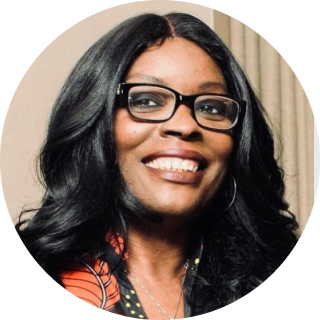
“What we hear consistently from women across metro Atlanta is that the hardest skill to learn is the one no one teaches: how to navigate disconnected public and private systems while in crisis. Women are managing childcare, housing, employment, and financial stress at the same time they are trying to build the capabilities that will move their families forward. When systems are fragmented, those skills become nearly impossible to develop alone. Our research helps illuminate that reality so we can invest in peer-led, integrated, and family-centered approaches that meet women where they are rather than where systems expect them to be.”
DiShonda Hughes, Chief Mission Officer
Frequently Asked Questions